You’ve chosen a beautiful bottle, perhaps one to open at Christmas, perhaps one to keep for a birthday years from now. Then December arrives, the house warms up to 30 degrees, and the bottle sits on top of the fridge or in a sunny cabinet. By the time you open it, the fruit has gone flat and tired.
It’s one of the most common ways good wine is spoiled, and almost none of it happens in the cellar. It happens at home in the weeks after purchase. South African summers are hard on wine, and most of our homes weren’t built with a cellar in mind. The good news is that you don’t need one. You need a few simple habits, and they matter most in the months ahead.
What is the ideal temperature for storing wine at home?
Aim for a cool, steady 12 to 16°C. Stability matters more than the exact number. The often-quoted sweet spot is around 13°C, but most bottles will be fine anywhere between roughly 10 and 18°C, as long as the temperature doesn’t swing up and down.
Heat is the real enemy. Above about 21°C, wine ages faster than it should, losing freshness and developing cooked, jammy notes. Daily swings are almost as harmful. Wine that warms through a hot afternoon and cools again overnight expands and contracts in the bottle, which can push against the cork and let air creep in. A cupboard that stays a constant 18°C is kinder to wine than a room that drops to 12°C at night and climbs to 28°C by afternoon.
Where is the best place to store wine in a South African home?
Choose the coolest, darkest, most stable spot you have, usually somewhere central and low. In most South African homes, that means:
- An interior cupboard or under-stair space away from outside walls, which heat up in the afternoon sun.
- A low shelf in a south-facing room, since cooler air settles near the floor and south-facing rooms get less direct sun here.
- A spare bedroom wardrobe that stays closed and dark most of the day.
Avoid these places, even though they’re the most common:
- On top of the fridge. It’s warm, and it vibrates.
- The kitchen. Ovens, kettles and dishwashers create constant temperature swings.
- Garages and outbuildings. They can get very hot in summer.
- Display racks near windows. They look lovely but expose bottles to light and heat.
Does light really affect wine?
Yes. Sunlight and strong artificial light can age wine prematurely and dull its aromas. This is part of why fine wines come in dark green or amber glass. White wines and rosés in clear or pale bottles are the most vulnerable, so give your Rosie and Chardonnay the darkest spot you have.
Should wine bottles be stored on their side?
If the bottle has a natural cork and you plan to keep it for more than a few months, yes. Lying the bottle on its side keeps the wine in contact with the cork, which stops the cork drying out and shrinking. Screwcap bottles can stand upright without any problem.
Humidity follows the same logic. Cellars aim for around 60 to 70% humidity to keep corks supple, but for most homes this rarely matters unless you’re keeping bottles for many years. If you live inland, where winter air can be very dry, a closed cupboard is a safer choice than an open rack.
Is a wine fridge worth it?
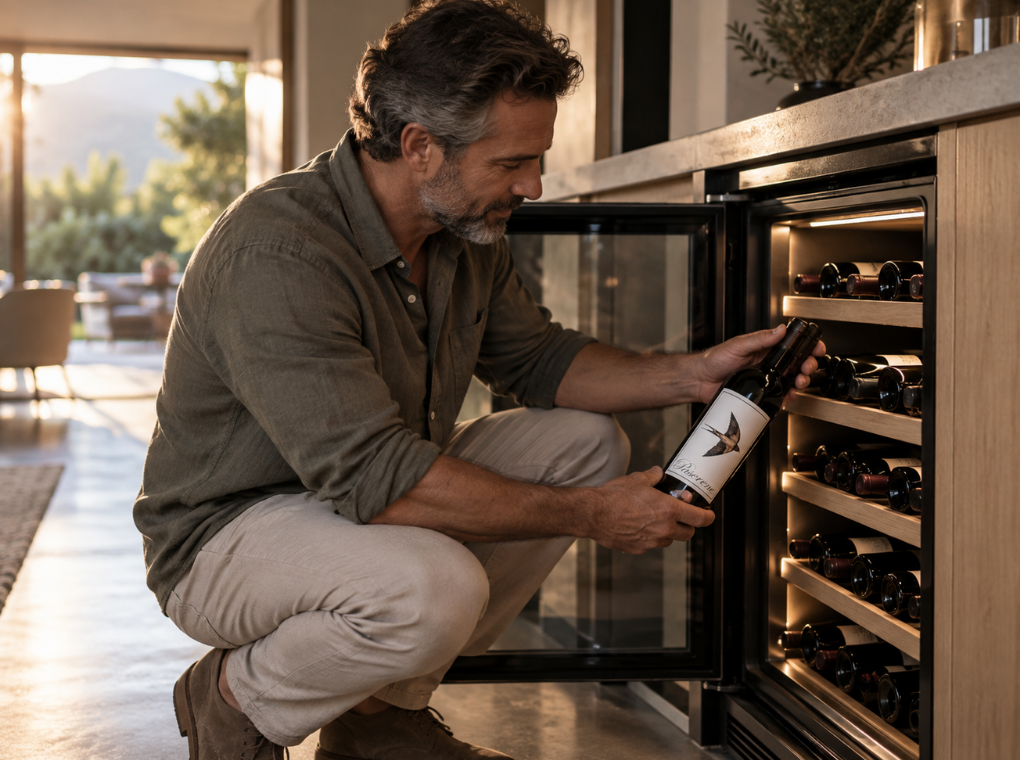
If you buy wine to keep rather than to drink within a few weeks, a wine fridge is the simplest way to get stable conditions in a warm climate. It’s not the same as your kitchen fridge. A standard fridge runs too cold for long-term storage and its dry air can dry out corks over time. It’s fine for a bottle of white you’ll open this weekend, but it’s not a home for a wine you’re ageing.
A wine fridge holds a steady cellar temperature, keeps bottles dark, and lets you store everything on its side. For South African homes, one practical caution: power cuts can let a wine fridge warm up. Keep the door closed during an outage and it will hold its temperature for several hours.
How long can you keep wine before opening it?
That depends entirely on the wine. Most wine is made to be enjoyed within a few years of release, and only some is built for long ageing. With our own range, the split is clear:
- Drink now and through summer: Rosie, Bright and the Elements Dark are made for freshness and immediate enjoyment.
- Keep for years: Paserene Union 2020 is a concentrated, unfiltered Syrah that we expect to develop for 25 to 30 years. Our Marathon Cabernet Sauvignon is also built for the cellar.
If you’re building a small collection, our guide to elevating your wine cellar with boutique wines covers what to look for.
How long does wine last once it’s opened?
Once the cork comes out, oxygen starts to change the wine, so the clock runs in days rather than years:
- White wines and rosé: about 2 to 3 days in the fridge, resealed with the cork or screwcap.
- Red wines: about 3 to 5 days with a stopper in a cool, dark place. Fuller reds with more tannin, like Syrah and Cabernet Sauvignon, usually keep longer than lighter styles.
In a South African summer, put opened reds in the fridge too. Refrigeration slows oxidation for every style. Take the bottle out about half an hour before you pour so it isn’t served too cold. Our guide to serving temperatures for South African wines explains why a slightly cool red tastes better on a warm evening.
What should you do when wine is delivered to your door?
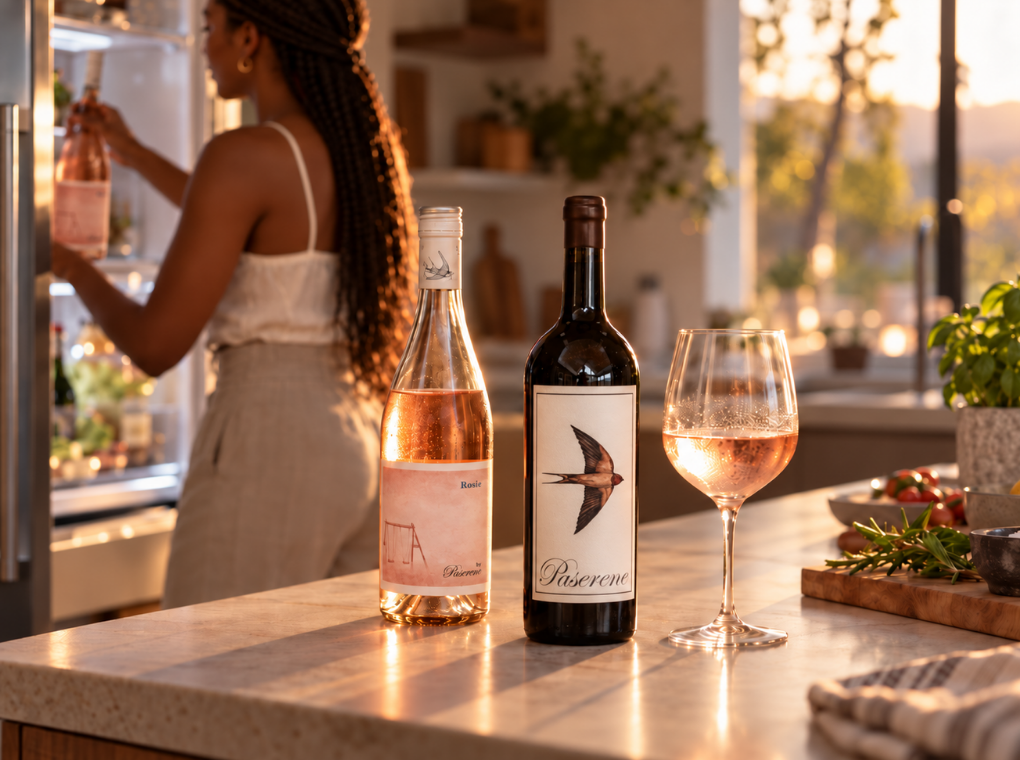
Unpack it straight away and move it to its storage spot. Don’t leave the box in a hot hallway or the car boot. If the wine has travelled through the heat, let it rest for a few days before opening, especially older reds, which can taste a little muted after a journey. Our Franschhoek wine delivery guide explains how orders reach you from the estate.
FAQ
Can I store wine at room temperature?
For a few weeks, yes, if your home stays reasonably cool and steady. For anything longer, or through a hot South African summer, find a cooler spot or use a wine fridge.
Can I keep wine in the kitchen fridge?
For a few days or weeks, yes, especially whites and rosés you’ll open soon. For long-term storage, no: a kitchen fridge is too cold and too dry for corks over time.
Does wine go off if it gets too hot?
Sustained heat can “cook” a wine, flattening its fruit and ageing it prematurely. A single warm day rarely ruins a bottle, but repeated heat and temperature swings do lasting damage.
How do I know if an opened wine has gone off?
If it smells sharp or vinegary, or tastes flat and brownish, it has oxidised. It’s harmless, but past its best. Use it in a stew rather than in your glass.
Which Paserene wines are best for ageing?
Union, our flagship Syrah, and Marathon, our Cabernet Sauvignon, are built for the cellar. Rosie, Bright and the Elements range are made to enjoy now.
Keep something special for later
Good storage lets a wine reach the moment it was made for, whether that’s this weekend’s braai or a celebration years from now. Visit our tasting lounge in Franschhoek to taste what’s ready now and what’s worth keeping, or shop Paserene wines online to stock up before the summer.