South African Chardonnay is often chosen in winter because it can hold freshness and texture in the same glass. Its range makes it suited to cooler evenings, gentle food pairings, and slower tasting moments. Paserene’s Chardonnay offers a quiet estate reference point within the broader story of premium South African white wine.
Winter has a way of softening the edges of a wine country day.
The light arrives lower. Tables are drawn nearer to windows. Conversations move more slowly, and the glass in front of you begins to matter in a different way. In South Africa, where the vineyards are so often imagined under summer brightness, the colder months reveal another kind of beauty.
This is the season in which Chardonnay begins to feel especially at home.
Not because it asks for attention. Quite the opposite. South African Chardonnay can be calm, layered, and quietly expressive, carrying enough freshness for clarity and enough texture for the table. In winter, those qualities become easier to notice. The wine does not need heat, noise, or occasion around it. It simply needs time.
A national wine with many voices
To speak about South African Chardonnay is to speak about variety within unity. The grape has travelled through many of the Cape’s wine-growing landscapes, finding different expressions in coastal air, mountain influence, cooler pockets, and carefully chosen cellar work.
It is a generous variety in the sense that it listens. It responds to place and hand. It can show restraint or breadth, brightness or depth, depending on where it is grown and how it is guided. This is one reason Chardonnay remains one of the most recognised white wine grapes in the world, with styles that range from lean and precise to fuller and more rounded.
For a broader educational view of the grape, Wine Folly’s guide to Chardonnay offers a useful introduction to its global range and the way winemaking choices can shape its final character.
In South Africa, that global story becomes rooted in local light, local soils, and the particular patience of the Cape seasons.
Why Chardonnay belongs to winter
White wine is often placed too quickly into the language of summer. It is imagined beside pools, verandas, and warm lunches. Yet some white wines are deeply suited to winter, and Chardonnay is one of them.
What makes it so companionable in colder weather is its balance of lift and substance. A winter wine needs to feel present, but not heavy. It should meet richer food without becoming tiring. It should carry enough freshness to keep the palate awake, while offering a sense of roundness and calm.
South African Chardonnay can do this beautifully. It can sit beside roast chicken, mushrooms, root vegetables, buttered fish, soft grains, or a simple table of bread and cheese. It does not require elaborate food. It only asks that the meal have a little warmth and intention.
On a quiet evening, this is often enough.
The Paserene expression
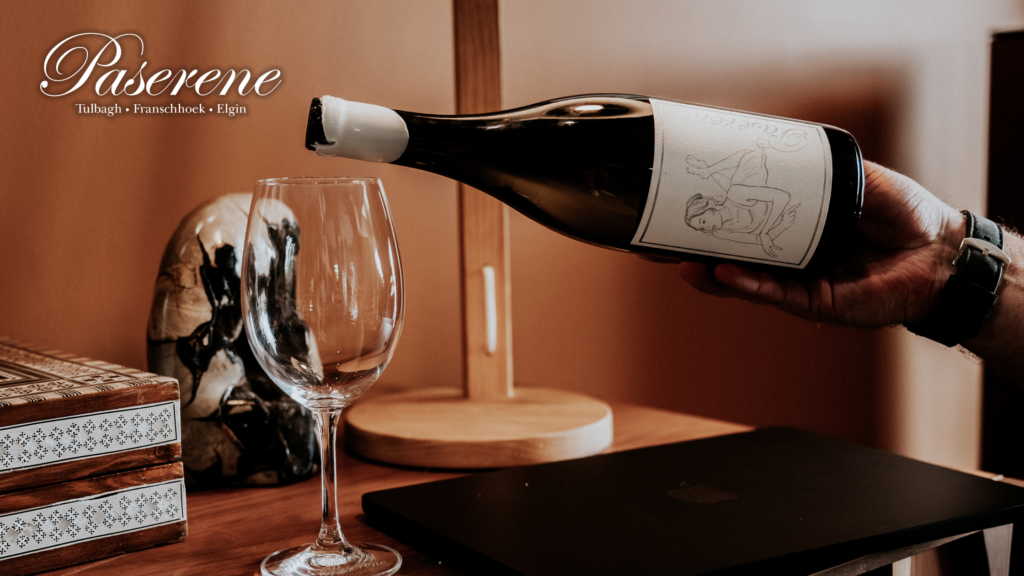
At Paserene, Chardonnay is part of a wider conversation about place, craft, and restraint. The Paserene Chardonnay 2022 gives this conversation a clear point of reference, without needing to be crowded by excessive description.
A wine should not be reduced to a list of impressions before it has had the chance to meet you in the glass. What matters first is its composure. The way it gathers itself. The way it carries texture without losing freshness. The way it can hold silence as well as flavour.
Chardonnay rewards this kind of attention. It is not a grape that must always announce itself. In its most thoughtful forms, it reveals detail gradually. The first impression may be shape. Then comes the sense of movement, the quiet weight, the line that carries the wine forward.
This is why winter suits it. The season allows enough stillness for the wine to unfold.
Tasting South African Chardonnay slowly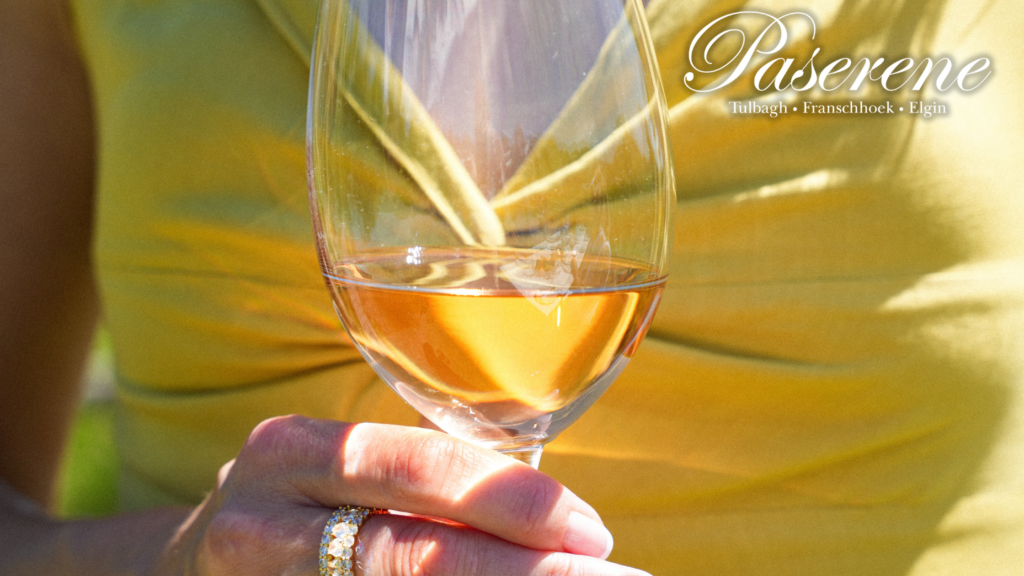
A winter tasting in the Cape Winelands can be a gentler experience than many people expect. Through a Franschhoek wine tasting at Paserene, the valley becomes part of the glass: the cooler air, the mountain line, the quieter movement of the day.
To taste slowly is not to make wine complicated. It is to give it room. Notice the temperature of the glass in your hand. Notice how the wine changes after a few minutes. Notice whether it feels linear, broad, lifted, or settled. These are simple observations, but they are often more valuable than searching for perfect terminology.
South African Chardonnay invites this kind of presence. Its pleasure is not only in flavour, but in balance. It can offer brightness without sharpness, texture without excess, and a feeling of ease that becomes more apparent when nothing is hurried.
That ease is easy to miss when wine is treated as a quick decision. In winter, it becomes easier to stay with it.
A table set for the colder months
The winter table does not have to be elaborate. A pot left to simmer. Vegetables roasted until their edges deepen. Fresh bread torn by hand. A bowl of soup, a soft cheese, a plate of something warm and unshowy.
Chardonnay can bring quiet structure to this kind of meal. It has enough presence to sit beside comfort, but it does not overwhelm the room. Where a dish is rich, the wine brings lift. Where flavours are earthy, it brings clarity. Where the table is simple, it brings a sense of occasion without ceremony.
This is perhaps the gift of a well-composed winter white wine. It does not try to replace the reds that so often dominate colder evenings. It offers another way into the season: lighter in colour, but not in feeling.
The quiet confidence of South African white wine
There is a quiet confidence emerging in the way many people speak about premium South African white wine. Less effort is needed to explain its seriousness. The wines themselves have done that work over time.
Chardonnay is an important part of this story because it can carry refinement without distance. It is familiar enough to welcome the curious drinker, yet complex enough to keep rewarding those who return to it. Its national strength lies not in one fixed style, but in the breadth of expressions it can hold.
For Paserene, this wider South African story remains inseparable from the estate’s own rhythm. Wine begins in place, but it also belongs to the people who gather around it. A glass poured in winter becomes part of the season: the weather outside, the meal on the table, the pause between one conversation and the next.
That is where South African Chardonnay finds its quiet power.
Not in grandeur. Not in noise. In balance, patience, and the calm pleasure of being exactly where you are.
FAQs
What is South African Chardonnay?
South African Chardonnay is a white wine made from the Chardonnay grape in South African wine regions. It can range from fresh and precise to more textured and rounded, depending on site and cellar choices.
Is Chardonnay a good winter wine in South Africa?
Yes. Chardonnay can be a beautiful winter wine because it has enough texture for cooler-weather food while still offering freshness and lift.
What food pairs well with South African Chardonnay?
South African Chardonnay can pair well with roast chicken, mushrooms, buttered fish, root vegetables, soft cheeses, and simple winter dishes with warmth and texture.
Which Paserene wine is referenced in this article?
This article references Paserene Chardonnay 2022, a product listed in Paserene’s Shopify collection.
Can I taste Chardonnay at Paserene?
Yes. Paserene offers a considered Franschhoek wine tasting experience where guests can explore the estate’s wines in a calm Cape Winelands setting.